
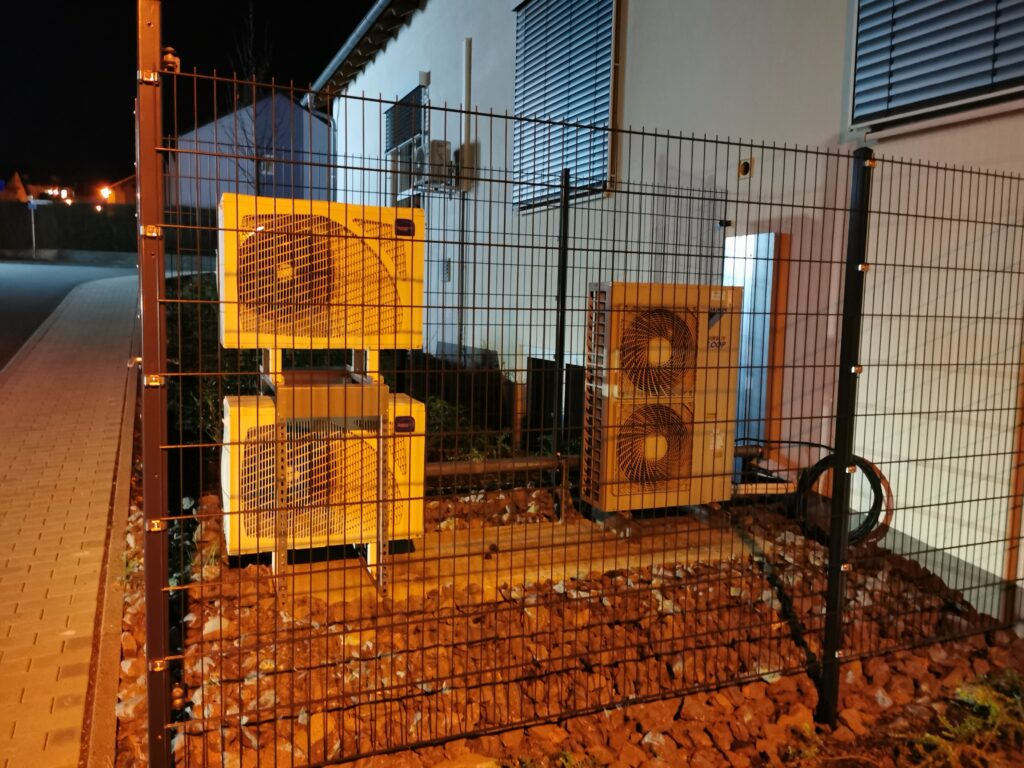
With energy prices still elevated and the gap between electricity and gas/oil costs narrowing, air-source heat pumps have become the most cost-effective heating system for the majority of homes. They heat 2–4x more efficiently than gas boilers or electric resistance systems — meaning for every $1 of electricity, you get $3–4 of heat.
This guide covers the best air-source heat pump systems available in 2026, from affordable ductless mini-splits to whole-home central systems. Whether you’re replacing an old oil boiler, upgrading from electric resistance, or adding climate control to a new room, there’s a system here for you. Looking for broader home efficiency wins beyond heating? See our 10 energy saving tips that actually lower your electric bill.
💡 Not sure if a heat pump makes financial sense for your home? Use our free Heating Cost Calculator to compare gas, oil, heat pump and electric resistance with your real energy prices.
Best air-source heat pumps at a glance
| System | Type | Capacity | SEER2 | Best for | Price range |
|---|---|---|---|---|---|
| DELLA Serena 22 | Mini-split | 12–18K BTU | 22–23 | Small-medium rooms | $650–$950 |
| Senville LETO | Mini-split | 9–24K BTU | 20.8 | Value pick, Alexa | $500–$800 |
| MRCOOL Easy Pro | Mini-split DIY | 12–18K BTU | 20+ | DIY install | $700–$1,100 |
| Mitsubishi M-Series | Central ducted | 1–5 ton | 18–20 | Whole home, cold climate | $3,500–$8,500 |
| Daikin Fit Aurora | Central ducted | 1.5–5 ton | 18–20 | Best warranty (12 yrs) | $4,000–$10,000 |
| Carrier Infinity 18VS | Central ducted | 2–5 ton | 18+ | Premium, reliable | $5,000–$12,000 |
Now let’s look at each system in detail.
Best mini-split heat pumps
1. DELLA Serena Series — best value mini-split
Best for: Small to medium rooms (up to 1,000 sq ft) seeking maximum efficiency at an affordable price.
The DELLA Serena earned the Red Dot Design Award 2025 and stands out with a lifetime parts warranty — rare in this category. Its 22–23 SEER2 rating means lower running costs than most competitors, and the R32 refrigerant has 67% lower global warming potential than older R410A systems. The self-cleaning mode prevents mold buildup automatically, with no manual work required.
Specs: 12,000–18,000 BTU | SEER2 up to 23 | Min operating temp: -13°F (-25°C) | Inverter compressor | WiFi ready
Why we picked it: Best combination of efficiency (SEER2 23), eco credentials (R32), and warranty coverage for under $1,000.
2. Senville LETO Series — best budget pick
Best for: Budget-conscious buyers who still want smart home integration and solid efficiency.
The Senville LETO delivers a 20.8 SEER2 rating at a price point well under most competitors. It supports Alexa and Google Home voice control out of the box, making it the most accessible smart-home-ready mini-split on this list. Available in 9,000 to 24,000 BTU configurations, it covers everything from a bedroom to a large open-plan living area. ENERGY STAR certified and backed by a 5-year parts warranty.
Specs: 9,000–24,000 BTU | SEER2 20.8 | Min operating temp: -22°F (-30°C) | Alexa/Google Home | ENERGY STAR
Why we picked it: Hard to beat at this price — smart home integration, ENERGY STAR certified, and operates down to -22°F.
3. MRCOOL Easy Pro — best for DIY installation
Best for: Homeowners comfortable with basic DIY who want to avoid professional installation costs ($500–$2,000+).
The MRCOOL Easy Pro is designed specifically for DIY installation — no line-set brazing or vacuum pump required. Pre-charged refrigerant lines click together, and the app-guided setup walks you through every step. It’s the only mini-split in this category that realistically lets a handy homeowner complete the job in a weekend. SEER2 rating of 20+ ensures you’re not sacrificing efficiency for convenience.
Specs: 12,000–18,000 BTU | SEER2 20+ | DIY Quick Connect line sets | App-guided setup | WiFi built-in
Why we picked it: The only genuinely DIY-friendly option that doesn’t compromise on efficiency — saving you $500–$2,000 on installation.
Best whole-home (central ducted) heat pumps
Central ducted heat pumps replace your existing gas furnace or air handler and use your home’s existing ductwork. They’re the right choice for whole-home heating and cooling — but require professional installation.
4. Mitsubishi M-Series — best for cold climates
Best for: Homes in cold-climate regions (IECC zones 5–7) where temperatures regularly drop below 0°F.
Mitsubishi’s Hyper-Heating INVERTER (H2i) technology is the benchmark for cold-climate performance. The M-Series maintains full heating capacity down to 5°F (-15°C) and continues operating at reduced output down to -13°F (-25°C) — well beyond what most heat pumps can handle. Variable-speed compressor means it runs quietly at part-load rather than cycling on and off. A 12-year parts warranty when installed by a Diamond contractor.
Specs: 1–5 ton | SEER2 18–20 | HSPF2 up to 10+ | Min operating temp: -13°F | Hyper-Heating technology | 12-year warranty
Why we picked it: Best cold-climate performance of any ducted system — no auxiliary heat strips needed down to 5°F.
5. Daikin Fit Aurora — best warranty
Best for: Homeowners prioritizing long-term reliability and the strongest manufacturer warranty in the category.
The Daikin Fit Aurora stands out with a 12-year parts and compressor warranty — the longest standard warranty of any central heat pump in this price bracket. Its side-discharge, low-profile design fits in tight spaces where traditional units won’t. SEER2 ratings of 18–20 and HSPF2 up to 9.5 deliver strong efficiency, and the Aurora model adds enhanced cold-climate performance rated down to -13°F.
Specs: 1.5–5 ton | SEER2 18–20 | HSPF2 up to 9.5 | Min operating temp: -13°F | 12-year parts warranty | Side-discharge
Why we picked it: No other central heat pump offers a 12-year parts warranty as standard — combined with cold-climate capability, it’s the safest long-term investment.
Our free Appliance Swap Calculator tells you if upgrading saves money — or if keeping your old machine is the smarter choice. Check your appliances →
Our Renovation Command Center spreadsheet tracks costs, timelines, and materials in one place — so you never go over budget. Get it here →
6. Carrier Infinity 18VS — best premium pick
Best for: Homeowners who want the most efficient, quietest, and most feature-rich central system and are willing to pay a premium for it.
The Carrier Infinity 18VS tops the range with variable-speed operation that adjusts output in precise increments rather than on/off cycling — delivering the most consistent indoor temperatures of any system on this list. Carrier’s Greenspeed Intelligence pairs the variable-speed compressor with a variable-speed air handler for maximum efficiency. Paired with the Infinity Touch Control thermostat, it provides granular zone control and energy monitoring.
Specs: 2–5 ton | SEER2 18+ | Variable-speed compressor | Greenspeed Intelligence | Infinity Touch Control compatible | Up to 10-year warranty
Why we picked it: The most comfortable whole-home system available — variable-speed operation eliminates temperature swings and runs quieter than any on/off system.
How to choose the right air-source heat pump
Mini-split vs central ducted: which is right for you?
Choose a mini-split if: You want to add heating/cooling to a specific room or area, your home has no existing ductwork, or you want to zone-control different rooms independently. Mini-splits are also the better choice for apartments, garages, home offices, and additions.
Choose central ducted if: You’re replacing an existing whole-home heating system and already have ductwork in place. Ducted systems provide more even temperature distribution across multiple rooms and are more discreet (no wall unit visible in each room).
What size heat pump do I need?
As a rough guide: 1 ton (12,000 BTU) per 400–600 sq ft for a well-insulated home. A 1,500 sq ft home typically needs 2.5–3 tons. In cold climates or poorly insulated homes, size up by 20–30%. Note: poor insulation forces your heat pump to work harder — before sizing your system, check our home insulation guide 2026. Always get a Manual J calculation done by your HVAC installer — oversizing causes short-cycling and reduces efficiency.
What SEER2 rating do I need?
SEER2 measures cooling efficiency; HSPF2 measures heating efficiency. For most homeowners, SEER2 18+ and HSPF2 9+ represents the sweet spot between upfront cost and long-term savings. Pairing a heat pump with a smart thermostat can add $200–$500/year in extra savings through intelligent scheduling. Going above SEER2 20+ makes financial sense if you’re in a hot climate with heavy air conditioning use.
How much can you save with a heat pump?
Switching from an oil boiler to an air-source heat pump typically saves $800–$2,000/year depending on your home size and local energy prices. Switching from electric resistance heating saves $600–$1,400/year. Gas boiler savings vary more — in countries where gas is cheap relative to electricity, heat pump savings are smaller, but where gas is expensive, heat pumps win decisively. For a direct comparison, see our guide on heat pumps vs. furnaces in 2026.
💡 Use our free Heating Cost Comparison Calculator to see exactly how much a heat pump would save you vs your current system — with real 2026 energy prices for your country.
Available rebates and incentives in 2026
- United States: Up to $2,000/year federal tax credit (IRA 25C) for qualifying heat pumps. Many states offer additional rebates — the HEEHR program provides up to $8,000 for low-to-moderate income households.
- United Kingdom: Boiler Upgrade Scheme (BUS) — £7,500 grant for air-source heat pump installation.
- France: MaPrimeRénov — up to €5,000 toward heat pump installation, income-dependent.
- Germany: BAFA grant — up to 35% of installation cost (up to €21,000 for new builds).
- Canada: Canada Greener Homes Grant — up to $5,000 for heat pump installation.
With these incentives, the payback period for a heat pump drops to 4–8 years in most cases — well within the 15–20 year lifespan of the unit. Before investing, it’s worth running a home energy audit to identify the biggest money leaks in your home first.
Related guides
- Heat pumps vs furnaces: which saves more money in 2026?
- Home energy audit: find and fix the leaks costing you $500+/year
- Home insulation guide 2026: costs, materials and DIY tips
- How to save money with a smart thermostat in 2026
- Free Heating Cost Comparison Calculator
Frequently Asked Questions
How much does an air-source heat pump cost in 2026?
Expect $4,500-$8,000 for a mid-range central heat pump and $2,000-$4,500 installed for a ductless mini-split. Installation alone runs $1,500-$3,000 depending on duct condition. Federal tax credits cut your net cost by up to $2,000. Use our heating cost calculator to estimate payback.
Do air-source heat pumps work in cold climates?
Modern cold-climate models (rated HSPF2 9.0+) maintain 75-90% efficiency down to -5°F and still produce heat at -15°F. Brands like Mitsubishi Hyper-Heat, Senville, and Mr. Cool explicitly rate for sub-zero operation. Pair with backup electric resistance for extreme cold snaps below -20°F.
How much can I save yearly with an air-source heat pump?
Homeowners replacing oil or propane furnaces save $800-$1,800/year. Replacing electric resistance heat saves $400-$900. Replacing natural gas (cheap in some states) saves $100-$400. Cooling replaces a separate AC, adding $150-$300 in summer savings vs older central AC.
Are federal tax credits available for heat pumps in 2026?
Yes — the Inflation Reduction Act’s 25C tax credit covers 30% of the cost up to $2,000 per year for qualifying ENERGY STAR heat pumps through 2032. Some states stack additional rebates of $1,000-$8,000. Keep installer invoices and manufacturer AHRI certificates for your tax filing.
How long does a heat pump last?
Well-maintained air-source heat pumps last 15-20 years. Ductless mini-splits often reach 20+ years. Compare this to 10-15 years for central AC and 15-25 for gas furnaces. Annual cleaning of outdoor coils and yearly professional service doubles the odds of hitting the 20-year mark.
Get Your Free Home Renovation Checklist
Join 500+ homeowners saving money on their renovations. Free checklist + weekly tips.